There are questions that are easy to ask but painful to live with.
Why does God allow evil and suffering?
If God is good, why do innocent people suffer? Why do children experience pain? Why do wars, abuse, disease, injustice, and loss continue when God has the power to stop them? And when suffering enters your own life, how can you still believe that God is loving?
These are not shallow questions, and Scripture does not treat them that way.
The Bible contains the cries of people who suffered deeply. Job asked difficult questions. David cried out in anguish. Habakkuk struggled to understand injustice. Even the disciples asked Jesus why certain suffering had happened. Their questions were not proof that they had no faith. They were part of wrestling honestly with a broken world.
The Bible does not give one simple explanation for every tragedy. But it does give us a larger story: God is good, evil is real, suffering is not what creation was meant to be, human beings have moral responsibility, and God has promised that evil and death will not have the final word.
These 25 Biblical truths will help you explore the question with honesty rather than easy answers. They will examine God’s character, human freedom, the reality of evil, the meaning of suffering, the cross of Christ, and the hope of restoration.
You may not receive an answer to every “why.”
But Scripture can help you discover where to stand when you do not have all the answers.
1. Why Does a Loving God Allow a World Filled With Pain?
This is often the first question people ask after experiencing tragedy.
If God is loving, why doesn’t He simply remove every painful thing? And if He is powerful enough to do so, why does evil continue?
The Bible begins with a world created by God as good. Evil and suffering are presented as an intrusion into that good creation, not as the purpose for which God made the world.
That distinction matters.
Christianity does not teach that pain is God’s ideal for humanity. It teaches that something has gone deeply wrong with the world—and that God is working toward restoration.
2. Does the Bible Give an Easy Answer to Suffering?
No—and pretending otherwise would make this article less honest.
Scripture sometimes explains why suffering exists in broad terms, but it does not tell us why every person experiences every specific tragedy. The Bible does not give Job a neat explanation for every detail of his suffering.
Instead, Scripture often changes the question.
Rather than giving us a complete explanation of everything God is doing, it calls us to know who God is.
That means a Christian can honestly say:
“I don’t understand why this happened, but I still believe God is good.”
Faith is not pretending to know everything.
Sometimes faith is trusting God while still carrying difficult questions.
3. What If Your Own Pain Is Making You Doubt God?
Suffering can make faith feel painfully personal.
It is one thing to discuss evil in a Bible study. It is another thing to sit beside someone you love in a hospital, lose someone unexpectedly, experience injustice, or watch a prayer remain unanswered.
Pain can make you ask questions you never expected to ask.
You may feel angry. You may feel confused. You may even feel distant from God.
The Bible gives you permission to bring those emotions into His presence. The Psalms are filled with honest cries, questions, and complaints.
You do not have to hide your pain from God in order to have faith.
You can question what happened without giving up on the One you are questioning.
4. Is God Responsible for Every Evil Thing That Happens?
This is one of the most important distinctions in the entire discussion.
The Bible does not teach that God approves of everything that happens simply because He allows it to happen.
There is a difference between God permitting an event and God morally approving of that event.
Scripture repeatedly condemns violence, injustice, oppression, cruelty, and sin. God may allow human beings to make real choices in a fallen world, but that does not mean He calls evil good.
This matters when we talk about suffering.
We should never use God’s sovereignty as an excuse to minimize another person’s pain or call evil acceptable.
What God permits is not always what God desires.
5. Where Can Christians Find Hope When There Is No Easy Answer?
Perhaps this is where the Christian message becomes most powerful.
The Bible does not tell us that suffering is imaginary.
It points us to the cross.
Jesus entered a world marked by rejection, injustice, violence, grief, and death. He experienced suffering Himself rather than remaining distant from human pain.
And Christianity does not end at the cross.
The resurrection declares that death and evil do not have the final word.
That does not make today’s suffering unimportant. It gives suffering a larger context.
The Christian hope is not that pain does not exist. It is that pain will not exist forever.
25 Biblical Truths About Why God Allows Evil and Suffering
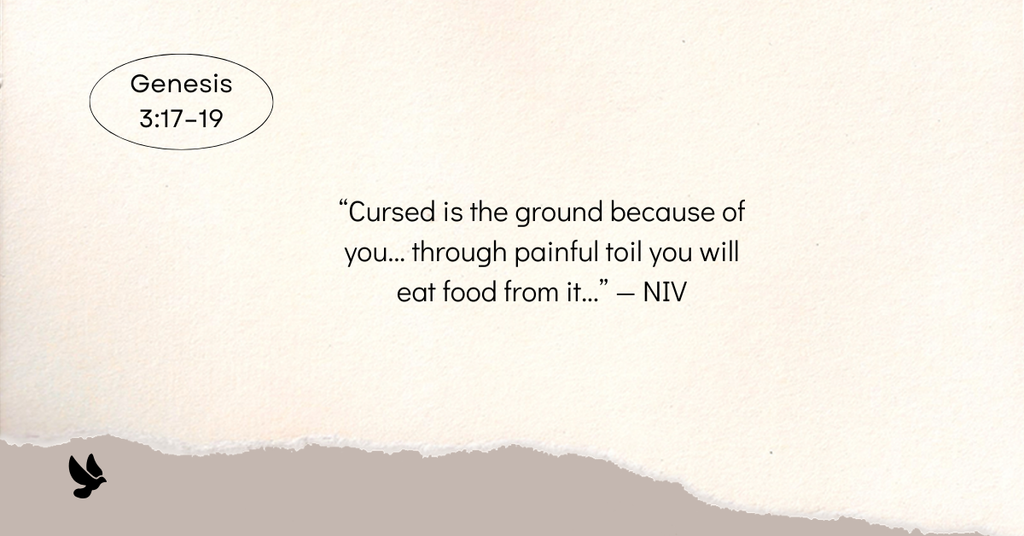
1. Genesis 3:17–19
“Cursed is the ground because of you… through painful toil you will eat food from it…” — NIV
Suffering Was Not God’s Original Design
The Bible begins with creation described as good, but Genesis 3 describes the entrance of human rebellion and the brokenness that followed. Pain, toil, frustration, and death become part of the human experience.
This gives us an important starting point: suffering is not presented as God’s original ideal for humanity.
What This Teaches Us
The brokenness we see in the world belongs to a creation that has fallen away from its original goodness.
Think About This:
When you see suffering, the Christian response is not to call evil good. It is to remember that the world is broken—and that God is working toward restoration.
2. Romans 5:12
“Sin entered the world through one man, and death through sin, and in this way death came to all people…” — NIV
Sin Changed More Than the Human Heart
Paul connects sin with the entrance of death into the human story. Christianity therefore takes evil seriously: the problem is deeper than bad circumstances or unlucky events.
Sin has damaged human relationships, society, and creation itself.
A Necessary Distinction
This verse does not mean every individual suffering is caused by a particular person’s personal sin.
It explains the larger biblical story of a world affected by sin and death.
Hold On to This:
The existence of suffering is one reason Christianity says the world needs redemption—not proof that God approves of suffering.
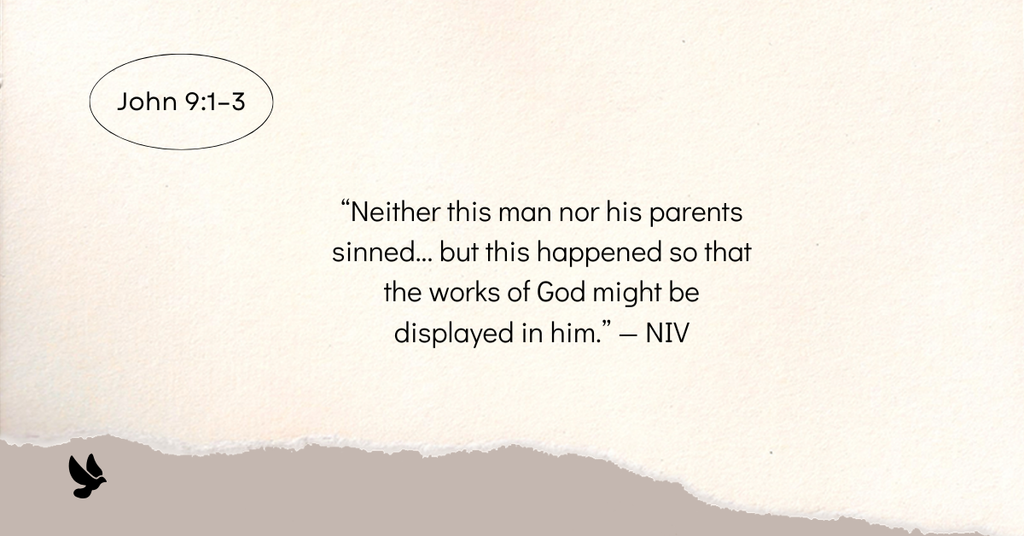
3. John 9:1–3
“Neither this man nor his parents sinned… but this happened so that the works of God might be displayed in him.” — NIV
Not Every Suffering Has a Simple Explanation
This is one of the most important passages for the entire topic.
Jesus’ disciples saw a man born blind and assumed someone must have sinned. Jesus rejected that assumption. He did not tell them to search for a personal sin behind the man’s suffering.
That protects us from a cruel mistake Christians sometimes make: assuming every illness, disability, or tragedy is God’s punishment for someone’s wrongdoing.
Why This Matters
Some suffering has causes we can identify. Some does not.
Jesus does not tell us that every tragedy has an explanation we can discover.
What This Teaches Us:
Do not add guilt to someone else’s suffering by pretending you know why it happened.
4. Job 1:21
“The LORD gave and the LORD has taken away; may the name of the LORD be praised.” — NIV
Faith Can Survive What It Cannot Explain
Job lost almost everything that gave stability to his life. His response was not a denial of pain. He mourned deeply.
Yet he continued to acknowledge God even when he did not understand what was happening.
Job’s story is important because the book never gives him the kind of simple explanation many people expect.
When Life Makes No Sense
Sometimes faith does not begin with an answer.
Sometimes it begins with the decision:
“I don’t understand this, but I will not stop seeking God.”
That is a different kind of courage.
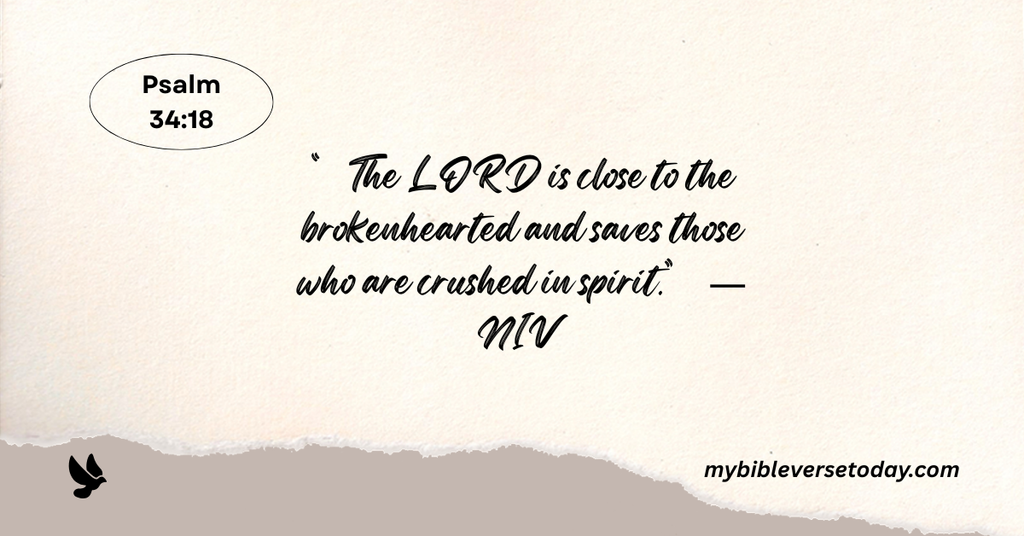
5. Psalm 34:18
“The LORD is close to the brokenhearted and saves those who are crushed in spirit.” — NIV
God Is Near to People Who Are Hurting
When suffering becomes personal, philosophical explanations can feel painfully small.
A person who has lost someone they love may not need another argument. They may need to know that God sees them.
Psalm 34:18 speaks directly to the brokenhearted. It reminds us that suffering does not make a person invisible to God.
For the Person Who Is Hurting Today
You do not have to pretend to be okay before coming to God.
Bring the broken heart with you.
6. Psalm 46:1
“God is our refuge and strength, an ever-present help in trouble.” — NIV
When You Cannot Change the Situation
Some problems cannot be solved immediately.
You may be facing grief, injustice, illness, war, or a loss that cannot simply be undone.
Psalm 46 does not promise instant escape from trouble. It gives believers a place to stand inside trouble: God Himself.
A Different Kind of Strength
The Christian hope is not that suffering never comes.
It is that suffering does not leave you without God.
Practice This:
When you feel overwhelmed, stop trying to solve everything at once. Bring the situation to God as your refuge.
7. Habakkuk 1:2–3
“How long, LORD, must I call for help, but you do not listen?… Why do you make me look at injustice?” — NIV
The Bible Gives You Permission to Ask Hard Questions
Habakkuk looked at violence and injustice and asked God why He seemed silent.
That is important.
The Bible does not hide difficult questions in order to protect faith. It puts them into Scripture.
You are allowed to ask:
“Why is this happening?”
“Why isn’t God stopping it?”
“How long will this continue?”
Honest Faith Is Still Faith
Asking questions does not automatically mean rejecting God.
Sometimes questioning becomes part of learning to trust Him more deeply.
8. James 1:13–14
“When tempted, no one should say, ‘God is tempting me.’ For God cannot be tempted by evil, nor does he tempt anyone…” — NIV
God Is Not the Author of Evil
This passage makes an important distinction: God is not morally responsible for tempting people into sin.
James explains that temptation is connected to human desires.
That matters when discussing evil because we should not casually say, “God wanted that evil to happen,” as though God delights in sin.
Scripture consistently presents God as holy and opposed to evil.
What This Protects Us From
We should never use God’s sovereignty as an excuse to call wickedness good.
God’s permission and God’s moral approval are not identical things.
9. Matthew 5:44–45
“Love your enemies and pray for those who persecute you… He causes his sun to rise on the evil and the good…” — NIV
A Broken World Still Receives God’s Common Grace
Jesus acknowledges that good and evil people live in the same world and experience many of the same basic gifts of life.
That reality can be confusing. Why do good people suffer while harmful people sometimes prosper?
Jesus does not give us a simple formula.
Instead, He points us toward the Father’s character: God’s generosity extends even to people who do not honor Him.
A Difficult but Important Truth
The fact that evil people sometimes prosper does not mean God has stopped being just.
It means final justice is larger than what we can see in the present moment.
10. John 16:33
“In this world you will have trouble. But take heart! I have overcome the world.” — NIV
Jesus Never Pretended Life Would Be Easy
Christianity does not promise believers a trouble-free life.
Jesus says plainly that His followers will face trouble.
But He does not stop there.
He tells them to take heart because He has overcome the world.
Hope in the Middle of Trouble
The promise is not:
“Nothing bad will ever happen to you.”
The promise is:
“Trouble will not have the final victory.”
That is why Christian hope can exist alongside suffering.
11. Romans 8:18
“I consider that our present sufferings are not worth comparing with the glory that will be revealed in us.” — NIV
Today’s Pain Is Not the Whole Story
Paul does not minimize suffering. He calls it suffering.
But he also says that present suffering is not the final measure of reality.
Christianity looks beyond the present moment toward God’s promised future.
When Suffering Feels All-Consuming
Pain can make today feel like forever.
Paul reminds believers that today’s experience is not the end of the story.
Let This Give You Perspective:
You do not have to pretend today’s pain is small. You can acknowledge its weight while still believing that God has promised something greater beyond it.
12. Romans 8:28
“And we know that in all things God works for the good of those who love him…” — NIV
God Can Work Through What He Does Not Approve
This verse is often misunderstood.
It does not say that everything that happens is good.
Abuse is not good. Injustice is not good. Death is not good.
The promise is that God can work through all things for the good of those who love Him.
Why This Matters
God’s ability to redeem suffering means evil does not get the final word over your story.
You may not see the purpose yet. That does not mean God has stopped working.
13. 2 Corinthians 4:17–18
“Our light and momentary troubles are achieving for us an eternal glory that far outweighs them all.” — NIV
Look Beyond What You Can See
Paul encourages believers to fix their attention not only on what is visible but also on what is eternal.
That does not mean calling severe suffering “small.” Paul himself endured enormous hardship.
His point is about comparison: temporary suffering is not the final reality for those who belong to Christ.
When You Feel Trapped in the Present
Suffering can make it difficult to imagine anything beyond today.
This passage invites you to lift your eyes toward what God has promised.
Faith says:
What I can see is not all that exists.
14. 1 Peter 5:10
“The God of all grace… will himself restore you and make you strong, firm and steadfast.” — NIV
Suffering Does Not Have to Destroy Your Faith
Peter acknowledges that believers may suffer for a time, but he places that suffering inside a larger story of God’s grace.
The promise is not that Christians will never hurt.
It is that God can strengthen, establish, and restore His people through suffering.
Keep Going
There may be seasons when the strongest thing you can do is simply remain faithful.
You don’t have to understand every part of God’s plan to keep walking with Him.
15. Revelation 21:4
“There will be no more death or mourning or crying or pain, for the old order of things has passed away.” — NIV
Evil and Suffering Will Not Have the Final Word
The Bible’s answer to suffering does not end with an explanation.
It ends with restoration.
Revelation looks toward a future in which death, mourning, crying, and pain are no more.
This is not a promise that every tragedy will be explained in this lifetime. It is a promise that God’s final future is not one in which suffering continues forever.
The Hope Christians Hold Onto
The Christian message is ultimately not:
“Everything painful makes sense.”
It is:
“God will make all things new.”
And for someone standing in the middle of suffering, that hope matters.
16. Genesis 50:20
“You intended to harm me, but God intended it for good…” — NIV
God Can Bring Good From What Was Meant for Evil
Joseph’s story shows us something important about suffering: God can work through terrible circumstances without calling those circumstances good.
Joseph’s brothers deliberately harmed him. Their actions were wrong. Yet years later, Joseph could see that God had worked through the situation to save many lives.
That does not make his brothers’ choices acceptable. It shows that evil does not have the power to control God’s final purpose.
When Someone Has Hurt You
You may not understand why a painful event happened.
You may never call the event “good.”
But you can still believe that God is capable of bringing redemption from it.
Hold on to this: What someone intended for harm does not have to determine what God can do with your future.
17. Psalm 73:16–17
“When I tried to understand all this, it troubled me deeply till I entered the sanctuary of God; then I understood their final destiny.” — NIV
Some Questions Become Clearer When We Step Back
Asaph struggled with a difficult question: why do wicked people sometimes appear to prosper while good people suffer?
That question is still with us.
You may see dishonest people succeed while honest people struggle. You may see injustice go unpunished while innocent people carry the consequences.
Psalm 73 does not pretend those observations are easy.
But the psalmist’s perspective changes when he turns his attention back to God.
When Life Looks Unfair
Sometimes we become so focused on what is happening in front of us that we lose sight of the larger picture.
Try this: When injustice makes you angry or confused, bring that question honestly to God instead of allowing bitterness to become your final conclusion.
18. Micah 6:8
“Act justly and to love mercy and to walk humbly with your God.” — NIV
God’s Answer to Evil Includes the Way We Live
It is easy to ask why God does not remove all evil while forgetting that Scripture also calls us to resist injustice.
Micah’s message is practical: do what is right, love mercy, and walk humbly with God.
Christian faith is not only about explaining evil.
It is also about refusing to participate in it.
What Can You Do About the Brokenness You See?
You may not be able to solve every injustice in the world. But you can choose honesty instead of deception, kindness instead of cruelty, courage instead of indifference, and mercy instead of revenge.
Sometimes the Christian response to evil begins with the next right thing you can do.
19. Matthew 25:37–40
“Whatever you did for one of the least of these brothers and sisters of mine, you did for me.” — NIV
Compassion Is Part of the Christian Response to Suffering
Jesus did not teach His followers to stand at a distance from human suffering.
He called them to feed the hungry, care for the vulnerable, welcome the stranger, and help people in need.
When we encounter suffering, the question is not only, “Why did God allow this?”
It can also become:
“What can I do to help?”
Turn Your Compassion Into Action
You may not be able to remove another person’s suffering, but you can refuse to ignore it.
How to Apply This Truth:
Look for one practical way to help someone who is hurting. Compassion becomes powerful when it moves beyond words.
20. Romans 12:21
“Do not be overcome by evil, but overcome evil with good.” — NIV
Don’t Let Evil Change Who You Become
One of the dangers of suffering is that pain can slowly make us bitter.
Someone hurts you, and you begin wanting to hurt them back.
Someone treats you unfairly, and you begin believing that kindness is pointless.
Paul gives another path: do not let evil overcome you.
Fight Without Becoming What You Hate
Christian courage is not passive.
It does not mean pretending evil does not matter.
It means resisting evil without allowing hatred to shape your character.
Remember: You can stand against wrong without becoming consumed by it.
21. 1 Peter 2:21–23
“Christ suffered for you, leaving you an example, that you should follow in his steps.” — NIV
Jesus Entered Human Suffering
Christianity does not present God as someone who watches human suffering from a safe distance.
Jesus Himself experienced rejection, injustice, physical suffering, betrayal, and death.
Peter points believers toward Christ when they suffer unjustly. Jesus did not respond to suffering with sinful revenge. He entrusted Himself to God.
When You Feel Deeply Wronged
Your suffering may still be painful. Forgiveness may take time. Justice may still matter.
But Christ shows that suffering does not have to destroy your character or separate you from God.
Look to Jesus when you don’t know how to respond to pain.
22. 2 Corinthians 1:3–4
“The God of all comfort… comforts us in all our troubles, so that we can comfort those in any trouble…” — NIV
Your Pain Can Become a Place of Compassion
Some suffering changes the way we understand other people’s pain.
Someone who has experienced grief may notice another grieving person more quickly. Someone who has struggled with rejection may become more compassionate toward the lonely.
Paul teaches that the comfort we receive from God can become something we share with others.
Your Suffering Does Not Have to Be Empty
This does not mean suffering is good or that you should be grateful for tragedy.
It means God can bring compassion, wisdom, and ministry from experiences you never would have chosen.
How to Apply This Truth:
Use what you have learned through suffering to make someone else’s difficult road a little less lonely.
23. James 1:2–4
“Consider it pure joy… whenever you face trials of many kinds, because you know that the testing of your faith produces perseverance.” — NIV
God Can Grow Something in You Through Trials
James says something difficult: trials can produce perseverance.
He is not saying that suffering is enjoyable or that we should pretend pain does not hurt.
He is pointing to what God can produce through difficult seasons.
Patience. Endurance. Maturity. Perseverance.
When You Wish the Trial Would End
You may be praying for God to change the situation.
That prayer is understandable.
But you can also ask:
“Lord, what are You forming in me while I wait?”
The answer may not remove the pain, but it can keep the pain from becoming meaningless.
24. Psalm 103:13–14
“As a father has compassion on his children, so the LORD has compassion on those who fear him; for he knows how we are formed…” — NIV
God Understands Human Weakness
Sometimes suffering becomes harder because we are ashamed of how we are handling it.
You may think you should be stronger.
You should have more faith.
You should not be crying.
But Psalm 103 reminds us that God knows our human frailty. He understands our limitations.
You Don’t Have to Pretend Before God
You can be exhausted.
You can be confused.
You can grieve.
You can ask questions.
God’s compassion is not earned by pretending to be stronger than you are.
Bring your weakness to Him honestly.
25. Revelation 21:5
“He who was seated on the throne said, ‘I am making everything new!’” — NIV
God’s Final Answer Is Restoration
The Bible’s discussion of evil and suffering does not end with a philosophical argument.
It ends with a promise.
God says, “I am making everything new.”
This does not give us an explanation for every tragedy. It gives us something deeper: a promise about the destination of God’s story.
The world will not remain broken forever.
Death will not remain forever.
Evil will not remain forever.
Pain will not remain forever.
Hope Beyond the Question
You may still have unanswered questions.
You may still grieve.
You may still struggle to understand why something happened.
But Christian hope says that evil does not get the final word.
God does.
And His final word is restoration.
Carry This With You:
When you cannot understand the present, hold on to the God who has promised to make all things new.
When You Don’t Get the Answer You Wanted
One of the hardest parts of suffering is that sometimes we never receive a satisfying explanation.
You may pray for healing and still face loss. You may ask God to stop an injustice and see it continue. You may spend years wondering why something happened.
The Bible does not promise that every “why” will be answered in this life.
That can be difficult to accept.
But Christianity does not ask you to believe that suffering is meaningless simply because you cannot explain it. Scripture invites you to trust God’s character even when His purposes remain beyond your understanding.
You can have unanswered questions and still have genuine faith.
Does Suffering Mean God Has Abandoned You?
No.
The Bible repeatedly shows God’s people suffering while still being deeply loved by Him.
Joseph suffered injustice. Job suffered devastating loss. David experienced danger and rejection. Paul endured persecution. Jesus Himself suffered.
Their suffering was not proof that God had stopped caring.
This is especially important when someone is hurting. We should never tell a suffering person, “You are suffering because God is angry with you.” Jesus rejected that kind of simplistic explanation in John 9.
Sometimes the most faithful thing we can say is:
“I don’t know why this happened, but I know God is not indifferent to your pain.”
What Should Christians Do When They See Evil?
The question “Why does God allow evil?” can sometimes become so intellectual that we forget the people who are actually suffering.
The Bible calls believers to respond.
We should stand against injustice where we can. We should protect the vulnerable, help people in need, comfort those who grieve, speak truth, forgive without calling evil good, and pursue justice with humility.
You may not be able to solve every problem in the world.
But you can help one person.
You can speak up when someone is being mistreated.
You can offer practical support.
You can refuse to participate in cruelty.
Faith is not only about asking why evil exists. It is also about choosing not to add more evil to the world.
When Suffering Has Made You Angry With God
Sometimes Christians are afraid to admit this.
They think, “If I am angry, God will reject me.”
But Scripture contains prayers filled with grief, confusion, and honest questions. The Psalms show people bringing their deepest emotions directly to God.
You don’t have to hide your anger behind religious language.
Tell God what hurts.
Tell Him what you don’t understand.
Tell Him what you wish were different.
Honest prayer is not the same as abandoning faith.
Sometimes the road back to peace begins with telling God the truth about where your heart actually is.
What If My Faith Feels Weak?
Suffering can make even strong believers feel spiritually exhausted.
You may read Scripture and still feel empty. You may pray and still feel afraid.
That does not mean you have failed.
Faith is not measured only by how confident you feel. Sometimes faith is simply refusing to walk away when you don’t understand.
On some days, your prayer may be long and confident.
On other days, it may be only:
“God, help me.”
That prayer still turns your heart toward Him.
And when your own strength is limited, let other believers carry some of the burden with you. There is no shame in needing support.
How Can You Keep Hope When the World Feels Broken?
Hope does not mean pretending evil is small.
It means believing evil is not ultimate.
The Christian story begins with a good creation, moves through human rebellion and a broken world, reaches its center in Christ’s suffering and resurrection, and ends with God’s promise of restoration.
That larger story gives Christians a reason to keep hoping.
We may not understand everything happening between those points.
But we know where the story is heading.
God’s final answer to a broken world is not abandonment. It is renewal.
A Prayer When Evil and Suffering Are Hard to Understand
Heavenly Father,
There are things about this world that I do not understand.
I don’t understand why innocent people suffer. I don’t understand why evil sometimes seems to win. I don’t understand why some prayers appear unanswered.
But I bring those questions to You.
Give me the courage to be honest, the humility to accept what I cannot understand, and the faith to trust Your character.
Comfort those who are grieving. Strengthen those who are suffering. Protect those who are vulnerable. Give wisdom to people facing difficult decisions, and help us become people who respond to evil with truth, courage, mercy, and justice.
Keep my heart from becoming bitter.
Teach me to help where I can, pray when I cannot fix something, and trust You when the answers remain hidden.
And when the world feels unbearably broken, remind me of Your promise that You are making all things new.
In Jesus’ name, Amen.
Frequently Asked Questions
Why does God allow evil if He is all-powerful?
The Bible does not provide one simple answer that explains every instance of evil. It presents a world affected by sin, gives humans meaningful moral responsibility, and consistently teaches that God is opposed to evil. It also points toward God’s final judgment and restoration.
Does God cause suffering?
Scripture distinguishes between God’s sovereignty and human evil. The Bible does not teach that God morally approves of every harmful act simply because He allows it to occur. James 1:13 specifically says that God does not tempt people with evil.
Does every suffering happen because of sin?
No. Jesus directly challenged this assumption in John 9:1–3. While sin is part of the Bible’s explanation for the brokenness of the world, we should not assume that a particular person’s illness or tragedy is punishment for a particular personal sin.
Why doesn’t God stop evil right now?
The Bible does not give us a complete explanation of God’s timing. It does, however, promise that evil and death will not have the final word. Scripture points toward a future of judgment, restoration, and the removal of suffering.
Can I still trust God when I don’t understand Him?
Yes. Biblical faith often involves trusting God’s character without possessing every answer. Job, Habakkuk, David, and many other biblical figures brought difficult questions to God while continuing to seek Him.
What should I say to someone who is suffering?
Avoid simplistic explanations such as “Everything happens for a reason” when you do not know the reason. Listen, stay present, offer practical help, pray with them if they want prayer, and allow them space to grieve.
Final Encouragement: Evil Does Not Get the Last Word
If you came to this article because something painful happened, I don’t want to give you an easy answer that sounds comforting but ignores reality.
Some suffering is devastating.
Some losses leave permanent scars.
Some questions may remain unanswered for a very long time.
The Bible does not ask you to call suffering good.
It asks you to believe that suffering is not the end of the story.
God sees what humans overlook.
He cares about the brokenhearted.
He calls His people to resist evil and practice justice.
He entered human suffering through Jesus Christ.
And He promises a future in which death, mourning, crying, and pain will be no more.
So when you ask, “Why does God allow evil and suffering?”, you may not receive a complete explanation today.
But Scripture gives you something solid to hold on to:
God is not indifferent. Evil is not eternal. Suffering is not the final chapter.
Until that promised restoration comes, keep seeking God, keep caring for people who hurt, keep standing against evil, and keep holding on to hope.
You do not have to understand everything to trust God with what you cannot understand.
Subscribe for Daily Encouragement
Get daily Bible verses, faith-based motivation, and spiritual guidance.
→ Subscribe Now for Free Daily Strength