1. Why Difficult Decisions Feel So Scary
Some decisions look simple from the outside but feel overwhelming when your future is connected to them.
Should you take the new job? Stay in the relationship? Move to another place? Wait longer? Say yes, or finally say no?
The fear is often not the decision itself. It is the thought of making the wrong choice and regretting it later.
That fear can make you overthink every possibility until you feel unable to move at all. But God does not ask you to know the future before you trust Him.
You can pray, seek wisdom, consider the consequences, and still move forward without having perfect certainty.
Faith does not mean you will never feel unsure. It means uncertainty does not have to control you.
2. What Do These Bible Verses for Difficult Decisions Teach About God’s Guidance?
The Bible does not promise that every decision will come with an obvious sign or a voice from heaven.
Instead, Scripture repeatedly points us toward wisdom, prayer, God’s Word, wise counsel, and a heart willing to obey.
That matters because sometimes we are waiting for a dramatic answer when God is already giving us principles to follow.
You may not receive a sentence saying, “Choose option A.”
But you can ask:
Is this wise?
Does it honor God?
Does it agree with Scripture?
What are the likely consequences?
Have I sought trustworthy counsel?
God’s guidance is not always a dramatic moment. Sometimes it comes through a faithful process of prayer, wisdom, and obedience.
3. When You Are Afraid That One Wrong Choice Will Ruin Everything
This is where fear can become paralyzing.
You may think one decision will determine the rest of your life. That pressure can make even ordinary choices feel enormous.
But Scripture teaches us to trust God rather than assume everything depends on our ability to choose perfectly.
You are responsible for making wise choices, but you are not God.
You cannot know every future consequence.
You cannot control every person’s response.
You cannot predict every change in circumstances.
What you can do is make the best decision you can with the wisdom and information available to you, then entrust the outcome to God.
You don’t need perfect control to take a faithful step.
4. How to Use Bible Verses for Difficult Decisions Without Ignoring Wisdom
There is a danger on both sides.
Some people make decisions without praying at all.
Others keep searching for a “sign” and avoid making any decision unless they feel completely certain.
A healthier biblical approach is to bring faith and wisdom together.
Pray for God’s direction.
Study Scripture.
Seek mature and trustworthy counsel.
Examine your motives.
Consider practical consequences.
Be honest about what you know and what you do not know.
Then make a responsible decision and trust God with what follows.
This approach is especially important when a decision involves finances, marriage, health, work, or other serious responsibilities.
Faith is not the rejection of wisdom. It is trusting God while using the wisdom He has given you.
5. 10 Bible Verses for Difficult Decisions When You’re Afraid to Choose Wrong
The Scriptures below focus on different parts of the decision-making process: wisdom, trust, courage, guidance, patience, and surrender.
Some will comfort you when you are anxious.
Others will challenge you to slow down, seek wisdom, or stop relying entirely on your own understanding.
As you read each passage, don’t ask only:
“Which verse tells me what decision to make?”
Ask the deeper question:
“What kind of person is God calling me to be while I make this decision?”
That shift can change the entire process.
You may not receive an instant answer.
But you can become calmer, wiser, and more willing to follow God wherever the right path leads.
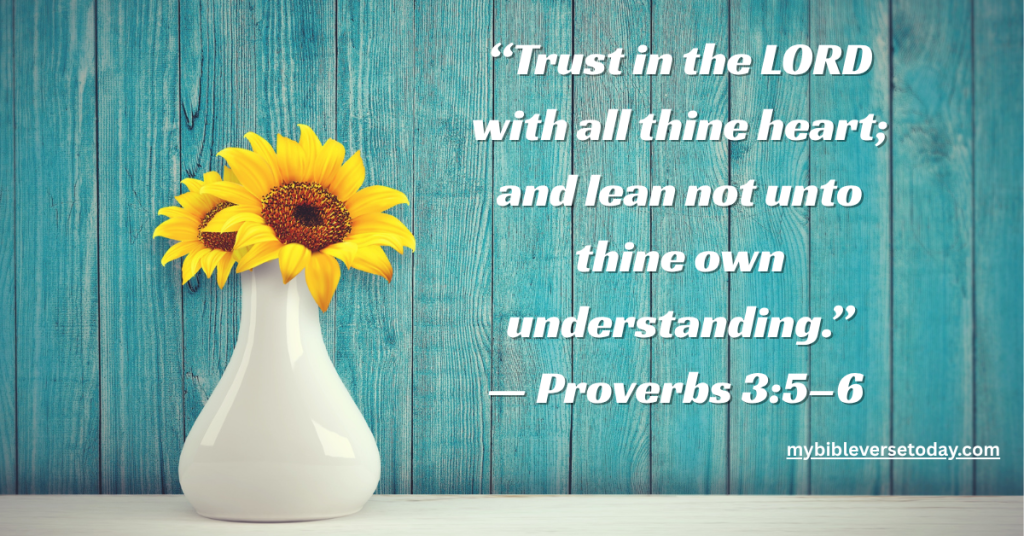
1. Proverbs 3:5–6 — Trust God When You Cannot See the Whole Path
“Trust in the LORD with all thine heart; and lean not unto thine own understanding.”
— Proverbs 3:5–6 (KJV)
Difficult decisions become heavier when you feel you need to understand everything before you can move forward.
But you never will.
There will always be information you do not have, outcomes you cannot predict, and questions that may remain unanswered. Proverbs reminds us that faith means refusing to make our limited understanding the final authority.
This does not mean ignoring wisdom or facts. It means recognizing that God sees what you cannot see.
What this means for your decision
Pray honestly. Think carefully. Seek wisdom. But when you have done what you reasonably can, trust God rather than allowing endless “what if” questions to control you.
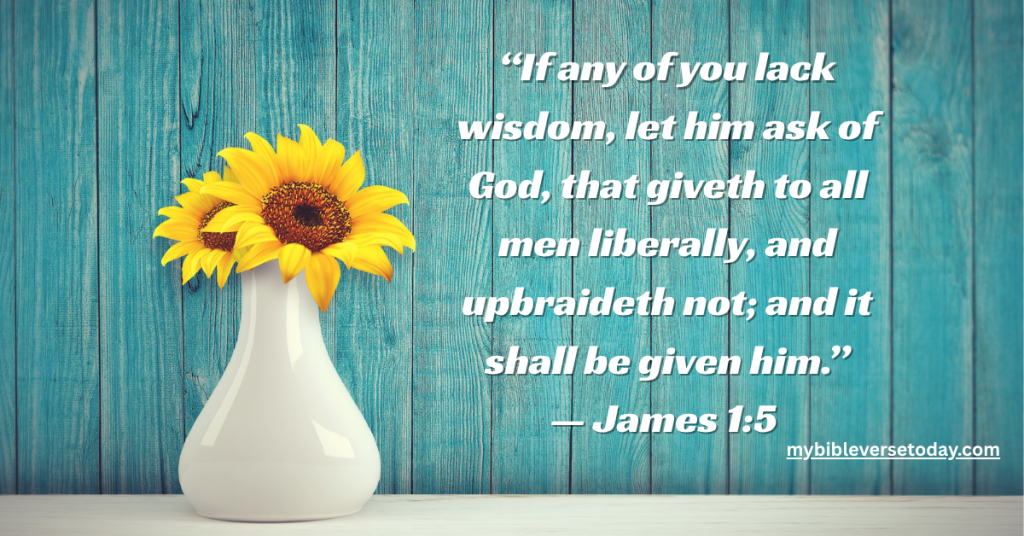
2. James 1:5 — Ask God for Wisdom Instead of Panicking
“If any of you lack wisdom, let him ask of God, that giveth to all men liberally, and upbraideth not; and it shall be given him.”
— James 1:5 (KJV)
Sometimes the problem is not that you do not care about God’s will.
The problem is that you simply do not know what the wisest choice is.
James gives you a simple response: ask God for wisdom.
Notice that the verse does not tell you to be embarrassed because you do not know what to do. God invites you to ask.
When you feel stuck
Instead of praying only, “God, please make the answer obvious,” try praying:
“Lord, give me the wisdom to see this situation clearly, the humility to accept truth, and the courage to obey what is right.”
That kind of prayer prepares your heart to receive wisdom rather than simply looking for the answer you already want.
3. Psalm 25:4–5 — Ask God to Teach You the Right Way
“Shew me thy ways, O LORD; teach me thy paths. Lead me in thy truth, and teach me.”
— Psalm 25:4–5 (KJV)
David does something important here.
He does not begin by demanding a specific outcome. He asks God to teach him God’s ways.
That is a powerful difference.
When we face a difficult decision, we can become so focused on getting the result we want that we stop asking whether our heart is becoming more faithful.
Before making your choice, ask
“Am I willing to follow God’s truth even if it is not the outcome I hoped for?”
That question can expose motives, reduce selfishness, and help you approach the decision with a more surrendered heart.
4. Proverbs 15:22 — Do Not Make Serious Decisions Alone
“Without counsel purposes are disappointed: but in the multitude of counsellors they are established.”
— Proverbs 15:22 (KJV)
Not every decision should be made in isolation.
When you are emotionally overwhelmed, you may not see a situation clearly. Fear can exaggerate problems, while excitement can make you overlook them.
Wise counsel gives you another perspective.
That does not mean asking everyone you know until someone agrees with you. It means seeking advice from people who are mature, trustworthy, honest, and willing to tell you the truth.
A wise question to ask
“What am I not seeing?”
Sometimes another person’s perspective reveals a risk, motive, or possibility that you completely missed.
God can use wise counsel to help you make a more responsible choice.
5. Proverbs 16:9 — Make Plans, Then Leave Room for God
“A man’s heart deviseth his way: but the LORD directeth his steps.”
— Proverbs 16:9 (KJV)
This verse offers a healthy balance between planning and trusting God.
You are allowed to make plans.
You are allowed to think about your future.
You are allowed to choose a direction.
But your plans are not a guarantee of what will happen next.
Sometimes a door closes after you have prayed and planned carefully. Sometimes circumstances change. Sometimes the path you expected turns out differently.
That does not automatically mean you failed to hear God.
Remember this
Planning is your responsibility. The final outcome is not completely in your control.
Make your decision prayerfully, then remain humble enough to adjust when circumstances change.
6. Philippians 4:6–7 — Do Not Let Anxiety Make the Decision for You
“Be careful for nothing; but in every thing by prayer and supplication with thanksgiving let your requests be made known unto God.”
— Philippians 4:6–7 (KJV)
Some decisions become almost impossible because anxiety gets involved.
You replay every possibility.
You imagine the worst outcome.
You ask the same question twenty different ways.
Eventually, you are no longer simply making a decision—you are trying to escape uncertainty.
Paul points you somewhere else: prayer.
Bring the decision to God honestly and repeatedly. Tell Him what you fear. Tell Him what you hope for. Thank Him even before you know how everything will turn out.
But remember
God’s peace is not necessarily a magical feeling that tells you which option to select.
Rather, His peace can help you remain steady enough to think clearly and act wisely instead of allowing fear to control your judgment.
7. Romans 12:2 — Let Scripture Shape Your Thinking
“Be not conformed to this world: but be ye transformed by the renewing of your mind.”
— Romans 12:2 (KJV)
Your choices are influenced by the way you think.
Culture may tell you to choose whatever is easiest.
People may tell you to choose whatever makes you look successful.
Fear may tell you to choose whatever keeps you comfortable.
But Scripture calls you to something deeper: a renewed mind that learns to recognize what is good and pleasing to God.
Before you decide, examine the influence behind your choice
Are you choosing from fear?
Are you choosing because of pressure?
Are you trying to impress someone?
Are you refusing something simply because it is difficult?
Or are you trying to make a choice that reflects biblical wisdom and godly character?
A renewed mind does not guarantee an effortless decision, but it can help you recognize unhealthy motives.
8. Luke 14:28 — Count the Cost Before You Say Yes
“For which of you, intending to build a tower, sitteth not down first, and counteth the cost?”
— Luke 14:28 (KJV)
Jesus used the example of building a tower to teach the importance of counting the cost.
That principle matters when making real-life decisions.
Faith does not mean acting impulsively and calling the result “God’s plan.”
Some choices require careful consideration.
A new job may affect your finances and family life.
A major purchase may create long-term debt.
A relationship may carry responsibilities you have not fully considered.
A move may change your support system.
Ask practical questions
What will this decision require from me?
What are the likely consequences?
What am I gaining, and what am I giving up?
Have I thought beyond the excitement of the moment?
Wise Christian decision-making includes prayer, but it also includes responsibility.
9. Psalm 37:5 — Commit the Outcome to God
“Commit thy way unto the LORD; trust also in him; and he shall bring it to pass.”
— Psalm 37:5 (KJV)
One of the hardest parts of decision-making is what happens after the decision.
You may choose carefully and still wonder whether you chose correctly.
You may make the best decision you can and then face unexpected problems.
This verse reminds you to commit your way to God.
That means more than asking Him to bless the outcome you prefer.
It means placing your plans, future, and uncertainty in His hands.
After you make the decision
Stop constantly reopening the question simply because you cannot control the future.
Continue praying.
Continue listening.
Continue doing what is right.
But do not punish yourself by living forever inside the sentence, “What if I chose wrong?”
Once you have prayerfully made a responsible decision, trust God with what comes next.
10. Joshua 1:9 — Choose Courage When Fear Wants You to Freeze
“Be strong and of a good courage; be not afraid, neither be thou dismayed: for the LORD thy God is with thee whithersoever thou goest.”
— Joshua 1:9 (KJV)
Joshua faced a future he could not fully control.
There were challenges ahead, and God did not tell him that everything would be easy.
Instead, God commanded him to be courageous and reminded him of His presence.
That is important when a difficult decision makes you afraid.
Sometimes you are not waiting for more information.
Sometimes you already know the next faithful step, but fear is keeping you from taking it.
Take this truth with you
Courage does not mean you feel no fear.
It means fear does not get the final vote.
You can move forward while still feeling nervous because your confidence is not ultimately in your ability to predict the future. Your confidence is in the God who goes with you.
What These 10 Bible Verses for Difficult Decisions Teach You
Together, these passages give a balanced picture of biblical decision-making.
Trust God when you cannot see the whole picture.
Ask Him for wisdom when you do not know what to do.
Seek wise counsel instead of isolating yourself.
Examine your motives instead of following every emotion.
Count the cost instead of acting impulsively.
Pray instead of allowing anxiety to take control.
Make responsible plans while remaining open to God’s direction.
And when you finally choose, entrust the outcome to Him.
You may not receive a dramatic sign.
You may not feel 100% certain.
You may still wonder whether you made the perfect choice.
But Christian faith was never built on having perfect knowledge of tomorrow.
It is built on trusting the God who already sees it.
What Should You Do When You Still Do Not Know What to Choose?
Sometimes you pray, read Scripture, think carefully, and still do not feel completely certain.
That does not mean God has abandoned you.
Some decisions simply do not have an obvious answer. Both options may have advantages. Both may involve sacrifice. And you may never know every consequence before you choose.
When that happens, do not keep waiting for perfect certainty.
Instead, return to the principles Scripture gives you.
Ask whether the choice is consistent with God’s Word. Examine your motives. Consider the consequences. Seek wise counsel. Pray honestly. Then ask whether you are willing to obey God even if the answer is not the one you hoped for.
You are not required to predict the future. You are called to walk faithfully with God today.
Subscribe for Daily Encouragement
Get daily Bible verses, faith-based motivation, and spiritual guidance.
→ Subscribe Now for Free Daily Strength
5 Questions to Ask Before Making a Difficult Decision
A difficult decision becomes clearer when you stop asking only, “Which option feels better?” and start asking deeper questions.
1. Does this choice agree with Scripture?
God will not guide you into something that directly contradicts His revealed Word.
Before searching for a special sign, make sure the decision itself respects biblical truth.
2. What is motivating me?
Fear, pride, pressure, loneliness, money, anger, and the desire for approval can all influence our choices.
Be honest about what is happening inside you.
Sometimes the biggest problem is not choosing between two options. It is discovering why you want one option so badly.
3. Have I listened to wise people?
You do not have to make every serious decision alone.
A mature Christian, pastor, mentor, or trusted person may notice something you cannot see because you are emotionally involved.
4. Have I considered the consequences?
Ask what this choice could mean six months, one year, or five years from now.
Not every consequence can be predicted, but responsible thinking can help you avoid unnecessary harm.
5. Am I willing to trust God after I choose?
This may be the most important question.
You can make a wise decision and still face unexpected difficulty.
Your confidence cannot depend entirely on everything going according to plan.
Make the best decision you can with the wisdom available to you, then place the outcome in God’s hands.
When Fear Says, “What If I Choose Wrong?”
Fear loves imaginary futures.
“What if I regret this?”
“What if I miss God’s will?”
“What if everything changes?”
“What if this decision ruins my future?”
Those questions can keep you trapped in hesitation.
But constantly imagining the worst outcome does not give you greater control. It often gives anxiety more power.
The Bible does not tell you to know tomorrow before taking today’s step.
Instead, Scripture repeatedly calls you to trust God, seek wisdom, and walk faithfully.
You may make a decision and later discover that circumstances changed.
You may have to adjust.
You may learn something you did not know before.
That does not automatically mean you failed God.
Sometimes wisdom means making the best choice you can and remaining willing to change direction when new information becomes clear.
How Bible Verses for Difficult Decisions Can Change the Way You Choose
The purpose of Scripture is not simply to give you a sentence you can use to justify the choice you already want.
It shapes the person making the choice.
These Bible verses for difficult decisions teach you to become more patient before you act, more humble before you decide, more willing to seek counsel, and more trusting when the future remains uncertain.
That is important because the “right” decision is not always the one that produces the easiest life.
Sometimes the faithful choice requires courage.
Sometimes it requires waiting.
Sometimes it requires saying no.
Sometimes it requires admitting that your original plan was wrong.
And sometimes you simply have to move forward without knowing exactly what will happen.
God’s guidance is not always about removing uncertainty. Sometimes it is about teaching you to trust Him in the middle of it.
A Simple Prayer Before You Make a Difficult Decision
Heavenly Father,
I am facing a decision that feels bigger than I can handle.
You already know everything I cannot see. You know my fears, my desires, my weaknesses, and the future that is ahead of me.
Please give me wisdom instead of confusion, patience instead of pressure, and courage instead of fear.
Help me examine my motives honestly. Keep me from making a choice simply because I am afraid, angry, lonely, or desperate.
Give me the humility to listen to wise counsel and the discernment to recognize what is right.
If I need to wait, help me wait faithfully. If I need to act, give me courage to move forward. And when I make my decision, help me trust You with the outcome.
I do not need to know everything about tomorrow to follow You today.
In Jesus’ name, Amen.
Related Articles
Continue strengthening your faith with these encouraging Bible studies:
- 40 Bible Verses for When You Feel Afraid About the Future
- 25 Bible Verses for When You Feel Unworthy of God’s Love
- Why Is God Silent? What the Bible Says When Heaven Feels Quiet
- 22 Powerful Bible Verses for Birthday Blessings to Start a New Chapter
- Top 15 Bible Verse for Youth to Guide, Strengthen, and Inspire Young Hearts
- What Does the Bible Say About Delayed Blessings? 20 Life-Changing Truths
- Why Does God Make Us Wait? 15 Bible Truths That Will Strengthen Your Faith
- Spiritual Warfare Scriptures: 31 Powerful Bible Verses for Strength in Life’s Battles
- For accurate Bible references and deeper understanding, this post links to trusted Christian sources such as Bible Gateway.
Final Encouragement: You Do Not Have to See the Whole Road
A difficult decision can make you feel as though your entire future depends on getting everything exactly right.
But you are not God, and you were never asked to carry the burden of knowing everything.
Pray.
Seek wisdom.
Check your motives.
Consider the consequences.
Listen to trustworthy counsel.
Search Scripture.
Then take the next faithful step.
You may still feel afraid.
You may still have questions.
You may not receive the certainty you were hoping for.
But uncertainty does not mean God is absent.
Sometimes faith looks like taking one careful step while saying:
“Lord, I do not know exactly where this leads, but I trust You with the road ahead.”
The goal is not to become someone who never struggles with difficult decisions.
The goal is to become someone who has learned where to take those decisions when they become difficult.
And that place is not fear.
It is God’s wisdom, God’s Word, and God’s faithful presence.